4th Grade Boo Crew Halloween Costume Tee
As a designer who spends more time behind the embroidery machine than in front of a computer, I look for more than just a cute image when evaluating a new file. I need to know how it will behave under the needle, how it translates from a digital preview to a tangible handmade product, and whether it holds up to the wear and tear of real life. When I first opened the files for the 4th Grade Boo Crew Halloween Costume Tee, my initial reaction was one of practical excitement. It captures that specific "teacher spirit" perfectly, but the devil is always in the details when we move from screen to stitch.
This isn't just another generic graphic; it feels like a cohesive unit designed for group coordination. The layout suggests a strong sense of community, which is exactly what makes it valuable for small business owners or Etsy sellers looking to create boutique merchandise. However, before you rush to upload this to your shop listing, let's walk through how this design actually performs in a real-world embroidery scenario.
First Impressions: Visual Personality and Layout
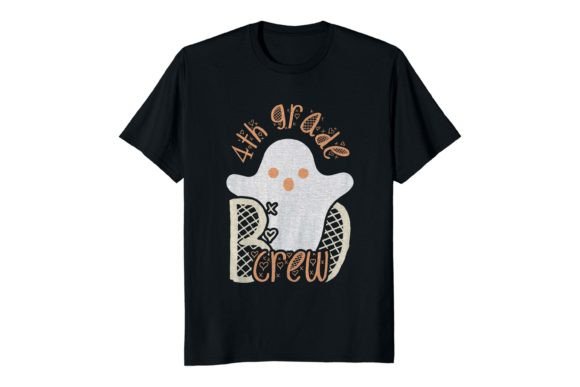
The moment you see the 4th Grade Boo Crew Halloween Costume Tee, the mood is clear: festive, organized, and fun. For an embroidery designer, the immediate question is about balance. Does the text compete with the graphics? Is there enough negative space for the stitching to breathe? In this case, the design strikes a solid chord. The typography is bold enough to be legible even after the fabric shrinks slightly during the pressing process, yet playful enough to fit the Halloween theme without feeling chaotic.
The visual personality screams "group project." Whether you are making matching tees for a 4th-grade class or creating a teacher-student duo set, the design naturally invites connection. It doesn't feel like a random collection of letters and shapes; it feels like a uniform. This is crucial for commercial embroidery because it adds perceived value. Customers aren't just buying a shirt; they are buying into a shared experience, which often leads to higher engagement on social media and better reviews for your shop.
Real-World Application: From Scrap Fabric to Finished Product
Let's imagine a specific scenario. You have a client, a local elementary school teacher, who wants to make matching embroidered tote bags for her students' parents as holiday gifts. She chooses the 4th Grade Boo Crew Halloween Costume Tee file for this project. Here is where the design truly shines.
Tote bags require a sturdy approach, and this design handles that well. The lettering is substantial enough to stand out against canvas fabric without getting lost in the weave. If you were to use a satin stitch for the main text, it would provide a nice sheen that contrasts beautifully with the matte texture of the bag. However, if you opt for a fill stitch for any graphical elements, you must ensure the density isn't too high, or the bag might become stiff and difficult to carry.
I also envision this design on a sweatshirt for a cozy classroom event. The heavier fabric can support a slightly denser stitch count, allowing the colors to pop without distorting the garment. But here is the catch: the design relies heavily on contrast. On a dark navy sweatshirt, you would need light thread colors, perhaps white or bright orange, to maintain the visibility that the original T-shirt mockup promises. If the thread choice is off, the entire "Boo Crew" concept loses its impact.
Where to Use Caution
Not every surface is a good match for this file. While it works wonders on flat surfaces like shirts and bags, I would advise against using it on highly textured fabrics or stretchy materials without significant stabilization. A thin cotton tee might pucker if the stabilizer isn't chosen correctly, especially around the dense areas of the text.
Curved surfaces, like baseball caps, present another challenge. The curvature of a cap can distort the perspective of the text, making the "4th Grade" part look stretched or compressed depending on the angle. If you attempt to embroider this on a cap, test it on a scrap piece of the same fabric first. You may need to adjust the digitization or choose a smaller hoop size to keep the design tight and centered.
Additionally, avoid placing this on baby clothes unless you simplify the design. Tiny lettering and intricate details can get lost in the softness of infant fabric, and the stitch density might be too rough for sensitive skin. For baby items, consider scaling down the design or simplifying the font weight to ensure comfort and clarity.
Impact on Brand Consistency and Customer Trust
For Etsy sellers and craft fair vendors, the quality of the embroidery speaks volumes about your brand. A sloppy stitch job or a design that looks blurry due to poor thread selection can erode customer trust instantly. The 4th Grade Boo Crew Halloween Costume Tee has the potential to elevate your finished product, but only if executed with care.
When customers receive a personalized gift that features crisp, clean lines and vibrant thread colors, they associate that quality with your attention to detail. This design, with its clear message and structured layout, lends itself to a professional finish. It helps establish a consistent brand identity, especially if you plan to sell a series of matching designs for different grades or subjects. The "Boo Crew" theme is timely and universally recognized, which aids in recognition and buyer engagement during the busy holiday season.
However, remember that the design itself is just the blueprint. The final result depends on your technique. Using the right stabilizer is non-negotiable. For a heavy-duty item like a tote bag, a cut-away stabilizer provides the necessary support to prevent puckering over time. For a lightweight t-shirt, a tear-away might suffice, but only if the design isn't too dense.
Practical Notes for the Embroidery Designer
Before you commit to a large production run, follow these steps to ensure success:
- Test on Scrap Fabric: Always stitch the 4th Grade Boo Crew Halloween Costume Tee on a piece of scrap material that matches your final project. Check for puckering, thread breaks, or color bleeding.
- Review Stitch Density: Look closely at the transition between satin and fill stitches. If the density is too high, the fabric may bunch up. If it is too low, the design might look sparse and cheap.
- Check Thread Color Contrast: Ensure your thread choices provide enough contrast against the fabric background. A design that looks great on a white digital mockup might disappear on a black shirt if the wrong thread is used.
- Inspect Small Details: Zoom in on the smallest text elements. Can they be read clearly after stitching? If not, you may need to increase the font size or simplify the design.
- Confirm Licensing: Before selling finished items or digital products, verify the license terms provided with the file. Some designs are for personal use only, while others allow commercial sales. Do not assume; check the documentation.
- Use Proper Stabilizer: Match your stabilizer to the fabric weight and the complexity of the design. This is the foundation of a clean embroidery project.
The 4th Grade Boo Crew Halloween Costume Tee is a versatile asset for any creative entrepreneur. It fits seamlessly into categories ranging from custom apparel and holiday gifts to boutique branding and commercial embroidery projects. By treating it with the same rigor you would apply to any other embroidery file, you can transform a simple digital graphic into a cherished physical keepsake.
Ultimately, the success of this design lies in the execution. It offers a strong foundation for building a line of seasonal products, but it requires the skillful hand of a designer to bring it to life. Take the time to test, refine, and perfect your setup, and you will find that this design delivers a finished product that your customers will love.