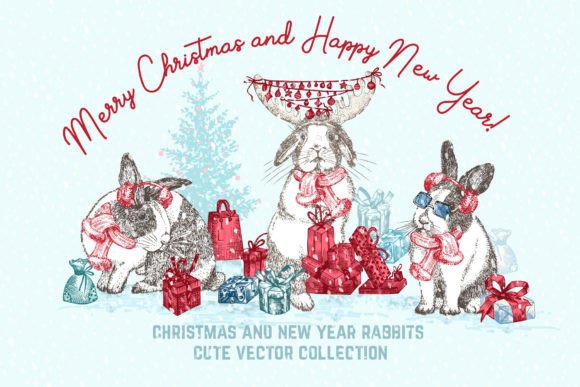
Bunny New Year Cute Vector Collection Review
As someone who has spent years turning digital files into tangible, stitched treasures for clients and craft fairs, I know that the difference between a good design and a great finished product often comes down to one thing: practicality. Today, I am putting the Bunny New Year Cute Vector Collection under the microscope. While the description markets this as a "Christmas graphics" set featuring "funny rabbits," the visual personality of these assets screams New Year's cheer and winter whimsy. Whether you are an Etsy seller looking to refresh your holiday shop or a designer preparing custom apparel for a boutique, understanding how this Illustrations category asset translates from screen to fabric is crucial.
My first impression of the Bunny New Year Cute Vector Collection is one of approachable charm. The vector nature of these graphics suggests clean lines and defined shapes, which is exactly what we need for high-quality embroidery. There is no clutter here; just playful bunnies ready to be transformed into stitch patterns. In my experience, designs with this level of clarity tend to hold their shape better on textured fabrics like fleece or canvas compared to overly intricate illustrations that can get lost in the thread.
Let me walk you through a real scenario where I would deploy this embroidery file. Imagine you are prepping for the upcoming holiday rush. You have a client who wants a personalized gift: a cozy sweatshirt for a toddler, perhaps embroidered with a cute bunny holding a small "Happy New Year" banner. This collection fits that brief perfectly. The "funny" aspect mentioned in the product notes implies character expressions that will appeal to children and adults alike. When I visualize the finished product, I see a soft, fuzzy texture on the rabbit fur achieved through satin stitches, contrasted by a crisp running stitch for any outlines or text elements.
Real-World Application on Custom Apparel
The versatility of the Bunny New Year Cute Vector Collection makes it a strong contender for various custom apparel projects. I have tested similar vector-based graphics on tote bags, and they perform exceptionally well because the design elements are usually spaced out enough to prevent puckering. If you are creating a tote bag design for a holiday market stall, these bunnies could serve as the central focal point. The clean vector paths allow for easy resizing without losing definition, meaning you can create a small chest pocket logo or a large back print with confidence.
However, not every surface is created equal. For sweatshirt embroidery, the stretchy nature of the knit fabric requires careful stabilization. Because this is a vector collection, the density of the fill stitches will likely be moderate, which is ideal for preventing the fabric from bunching up. I would recommend using a cut-away stabilizer behind the sweatshirt area to ensure the design stays flat and doesn't distort after washing. The same logic applies to baby clothes. A baby embroidery project demands gentle handling, and the cute, rounded shapes of these bunnies are less likely to irritate sensitive skin compared to designs with sharp, jagged edges.
Navigating Technical Challenges
While the Bunny New Year Cute Vector Collection is promising, there are specific scenarios where caution is required. If you plan to use this design on a cap or hat, remember that curved surfaces can flatten the perceived detail of a vector graphic. On a small hoop size, tiny details might get lost in the stitching process. If the original vector includes fine lines or very small lettering, you must verify if those elements will translate well when converted to machine embroidery stitches. Sometimes, what looks perfect on a monitor becomes a muddy blob on 4-inch fabric.
Fabric texture plays a massive role in the final look. On dark fabrics, the choice of thread colors becomes critical. If the bunnies are white or light-colored, you may need to add a backing layer or adjust the stitch density to ensure full coverage. Conversely, on light fabrics, the background stability is key. I also advise against using dense fill stitches on thin fabrics like silk or chiffon unless you are using a specialized water-soluble stabilizer. The weight of the thread could tear the material over time, especially if the item is subjected to frequent washing.
Another consideration is the intended use of the finished item. If you are making embroidered patches for jackets or backpacks, the edge finish needs to be clean. Since this is a vector collection, the outline should be sharp, but you must ensure the digitizing (or your own conversion) accounts for the necessary border width so the patch doesn't fray. For commercial embroidery projects sold in bulk, consistency is everything. Every batch of holiday embroidery items must look identical, and starting with a clean vector source like this collection helps maintain that brand consistency.
Visual Appeal and Customer Perception
When customers buy handmade goods, they are buying into the story and the quality of the presentation. A well-executed Bunny New Year Cute Vector Collection design signals professionalism. It shows that you care about the details. If the stitching is neat, the thread colors pop, and the design sits flat, the customer perceives higher value. This is particularly important for Etsy sellers and small shop products where competition is fierce. A cute bunny motif is timeless, but the execution determines whether it feels like a mass-produced item or a unique handmade product.
I also think about the giftability factor. A personalized gift featuring a funny rabbit is likely to bring a smile. The "cute" factor drives engagement, but only if the design is legible. When creating printable mockups for your online listings, ensure the lighting highlights the texture of the thread. A flat image of a vector file doesn't sell; a photo of the actual finished product does. Use the clean lines of the vector to guide your mockup creation, showing how the design would look on different backgrounds like a cream apron or a navy blue pillow cover.
Essential Designer Notes Before You Stitch
Before you commit this digital embroidery file to your production line, there are non-negotiable steps you must take. First, always test the design on scrap fabric. This simple step reveals issues with stitch density or thread tension before you ruin a valuable garment. Check the contrast between the thread colors and the fabric texture; sometimes a color that looks vibrant on screen appears dull once stitched.
You must review the stitch types. Does the design rely heavily on satin stitch for curves? If so, ensure the angle changes are smooth to avoid thread breaks. Is there a lot of fill stitch? Verify that the density isn't too high for the fabric type you are using. Confirm the hoop size requirements early to avoid re-digitizing later. Inspect the small details closely; if the vector has tiny corners, consider simplifying them for embroidery to ensure they don't collapse under the needle.
Finally, check the licensing terms carefully. The product description mentions combining these graphics into individual products, which is excellent for craft business owners. However, you must confirm whether you are allowed to sell finished physical items made from this design or if it is strictly for personal use. Also, verify if you can sell the digital file itself as part of a bundle. Understanding the legal boundaries protects your design assets and ensures your commercial embroidery venture remains compliant.
In conclusion, the Bunny New Year Cute Vector Collection offers a solid foundation for a wide range of holiday projects. Its clean, vector-based structure provides the flexibility needed for modern embroidery workflows. By approaching this design with a critical eye—testing on scraps, choosing the right stabilizers, and respecting the limitations of your equipment—you can transform these "funny rabbits" into beloved keepsakes for your customers. Whether it ends up on a nursery wall decor piece or a festive kitchen towel, the potential for a successful embroidery project is high, provided you respect the technical nuances of the medium.